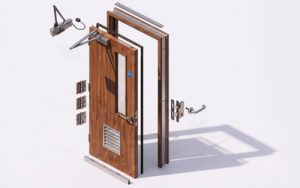




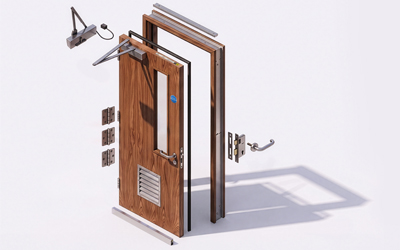
Fire doors play an essential role in protecting buildings, limiting the spread of fire, and providing occupants with additional time to evacuate safely. However, their effectiveness depends on more than simply installing a door with a fire-rated label. Every important component must work together as part of a tested fire-resistance system. This is particularly important when installing 90 minute fire rated doors, which are designed to provide a specified level of fire resistance under approved testing conditions.
A 90-minute fire door assembly includes several interconnected parts, such as the door leaf, frame, hinges, locks, seals, glazing, and closing hardware. If an incompatible component is installed or an essential part is modified, the door may no longer perform as intended. Understanding which parts must match helps property owners, contractors, and building managers maintain fire safety and comply with applicable building regulations.
1. The Door Leaf and Door Frame Must Be Compatible
The door leaf and frame are two of the most important elements of a fire-rated assembly. Both must be suitable for the required fire-resistance rating and approved for use together. A 90-minute-rated door should not automatically be installed in any available frame, even if the frame appears strong or is made from metal.
The frame must have the correct material, dimensions, construction, and fire-resistance characteristics specified by the tested assembly. Similarly, the door leaf must be designed to fit that particular frame without leaving excessive gaps.
When choosing 90 minute fire rated doors, always check the manufacturer’s installation instructions and certification documents. These should identify the compatible frame type and any restrictions on the installation.
2. Hinges Must Match the Door’s Weight and Fire Rating
Hinges support the entire weight of the door and allow it to open and close correctly. For a fire-rated assembly, they must also be suitable for fire-door applications.
The number, size, material, and positioning of hinges should follow the manufacturer’s approved specifications. Heavy fire doors may require particular hinge types or additional support depending on their construction and weight.
Ordinary decorative hinges should not be substituted for approved fire-door hinges. Incompatible hinges can weaken the installation, cause the door to sag, and create uneven gaps around the edges. These problems can affect the door’s ability to close properly during an emergency.
3. Intumescent and Smoke Seals Must Be Appropriate
Seals are essential components of a fire door because they help control the movement of heat, flames, and smoke.
Intumescent seals expand when exposed to high temperatures, helping close the gaps between the door leaf and frame. Smoke seals, which are often fitted around the edges of the door, help reduce the movement of cold smoke under normal fire conditions.
Both types of seals must be suitable for the specific door assembly. Their size, location, material, and installation method should match the manufacturer’s tested specifications.
It is also important to understand that not every 90-minute fire door automatically requires the same combination of seals. The correct arrangement depends on the tested design and applicable building requirements.
4. Locks and Latches Must Be Fire-Rated and Compatible
A fire door needs suitable locking and latching hardware to remain securely closed when required. The lock or latch must be compatible with the door’s construction and approved fire-resistance configuration.
Incorrect hardware can create problems because installing a lock may require cutting or drilling into the door leaf. Excessive or unauthorized modifications can damage its internal structure and compromise its fire performance.
For this reason, property owners should select locks, latches, and other security hardware specifically approved for the intended fire door assembly.
The latch should also engage correctly so that the door remains closed without requiring excessive force. A fire door that cannot latch securely may fail to provide the intended protection.
5. Door Closers Must Work With the Door Assembly
A door closer ensures that the fire door returns to its closed position after someone passes through it. This is especially important because fire doors should not be left open unless an approved automatic release system is installed.
The closer must be suitable for the door’s size, weight, opening direction, and operating requirements. Its closing speed and latching action should be adjusted according to the manufacturer’s instructions.
An undersized closer may struggle to shut a heavy door, while an incorrectly adjusted closer may cause the door to slam or fail to latch. Both situations can affect everyday usability and fire safety.
For 90 minute fire rated doors, the closer must form part of an approved installation rather than being selected based on appearance alone.
6. Glazing and Vision Panels Must Have the Correct Rating
Some fire doors include glass panels or vision openings to allow people to see through the door. However, ordinary glass cannot be used as a replacement for fire-rated glazing.
The glass, glazing beads, seals, and supporting frame must all be compatible with the tested fire door assembly. The approved design determines the permitted glass type, thickness, dimensions, and installation method.
Even a small vision panel can affect the door’s fire performance if it is installed incorrectly. Therefore, adding or enlarging a glass opening without authorization should always be avoided.
Where visibility is necessary, choose a complete fire-rated glazing system that has been tested and approved for the required fire-resistance period.
7. Door Gaps and Clearances Must Meet Specifications
The spaces around a fire door are just as important as the components attached to it. Excessive gaps can allow smoke and hot gases to pass through, reducing the effectiveness of the assembly.
The clearance between the door leaf and frame must follow the manufacturer’s approved installation instructions. The same applies to the gap at the bottom of the door.
Thresholds, floor coverings, seals, and other surrounding features must be considered during installation. A thick carpet or newly installed flooring, for example, could interfere with the door’s movement and prevent it from closing completely.
Regular inspections help identify changes in clearances, damaged seals, or other issues before they become serious safety concerns.
8. The Door Label and Certification Must Confirm the Rating
A fire door’s label or identification mark provides important information about its approved fire-resistance classification. It may identify the manufacturer, certification details, product model, and applicable rating.
For a 90-minute installation, the documentation should clearly establish that the door assembly is approved for the required 90-minute fire-resistance period under the relevant testing and certification system.
It is important to remember that a label on the door leaf alone does not prove that every installed component is compatible. The frame, hardware, glazing, seals, and installation details must also comply with the approved assembly specifications.
Keep certification documents and installation records available for future inspections and maintenance.
9. The Installation Method Must Follow the Approved Design
Even high-quality fire-rated components can fail to perform properly if they are installed incorrectly. The method used to secure the frame, position the door leaf, install hardware, and seal surrounding gaps can influence the overall performance of the assembly.
The wall construction must also be suitable for the required fire-resistance application. A properly rated door installed in an unsuitable wall may not provide the intended level of compartmentation.
Installers should follow the manufacturer’s instructions and applicable local building regulations. Any proposed substitution or modification should be checked against the door’s certification and approved installation details before work begins.
10. Common Mistakes to Avoid When Matching Fire Door Components
Several installation mistakes can reduce the effectiveness of a 90-minute fire door. Understanding these problems helps prevent unnecessary safety risks.
Common mistakes include:
- Installing a fire-rated door leaf in an incompatible frame.
- Using ordinary hinges instead of approved fire-door hinges.
- Replacing intumescent seals with unsuitable alternatives.
- Installing locks or latches that are not approved for the assembly.
- Using ordinary glass in a fire-rated vision panel.
- Fitting an unsuitable or incorrectly adjusted door closer.
- Trimming or drilling the door without manufacturer approval.
- Allowing excessive gaps around the door leaf.
- Painting over, removing, or damaging essential seals.
- Ignoring inspection and maintenance requirements.
Avoiding these mistakes helps maintain the integrity of the entire fire door assembly and supports long-term building safety.
11. How to Inspect a 90-Minute Fire Door Assembly
Regular inspections help confirm that all components remain in suitable working condition. Property owners and building managers should arrange inspections by competent fire-door professionals, following applicable regulations and maintenance schedules.
During an inspection, check that the door leaf and frame are free from significant damage, the hinges are secure, and the door closes smoothly. Confirm that the latch engages properly and that the closer brings the door fully into its closed position.
Inspect the seals for missing sections, damage, paint contamination, or incorrect installation. If the door includes glazing, check for cracks, loose beads, and other visible problems.
The identification label and supporting certification should also be reviewed to confirm that the installed assembly matches the required specification.
Any damaged or incompatible component should be assessed and replaced with an approved alternative rather than an ordinary substitute.
Conclusion
A 90-minute fire door is only as reliable as the complete assembly in which it is installed. The door leaf, frame, hinges, seals, locks, latches, closer, glazing, and installation details must all work together according to an approved fire-resistance design.
When selecting 90 minute fire rated doors, it is essential to look beyond the rating printed on the door itself. Every component should be compatible with the manufacturer’s tested specifications and the building’s fire-safety requirements.
Proper installation, suitable hardware, regular inspections, and timely maintenance help preserve the door’s intended performance. By ensuring that all parts match, property owners and building professionals can create a more dependable fire-protection system and improve safety for everyone inside the building.
